
You leave for work just before 8 a.m. Your dog went outside before you left, and you’ll be home around 5:30. They’ll be fine until then… right? Maybe. But there’s an important difference between how long a dog can hold their bladder and how long they should routinely be expected to wait for a bathroom break. At Shoreline Happy Paws, potty breaks are one of the many reasons recurring dog walks can make such a difference in a dog’s day. Today, we’re answering the common question, “How often does my dog need to go potty?”, so you don’t have to wonder if your dog’s bladder is about to explode.
 How Often Should an Adult Dog Go Potty?
There’s no universal schedule that works for every dog. Yet, according to this article from Penn Vet by the University of Pennsylvania School of Veterinary Medicine, adult dogs should ideally be given the opportunity to relieve themselves every four hours when possible. However, they may be physically able to hold urine for eight hours or longer.
A healthy adult dog may be physically capable of holding their bladder for several hours, but their individual needs can vary significantly. Size, hydration, diet, activity level, medications, health conditions, and normal bathroom habits can all affect how frequently a dog needs to urinate.
Most importantly, being able to hold it doesn’t necessarily mean your dog should have to hold it for an entire workday regularly. Think about your own workday. Even if you could skip every bathroom break until you got home, would you want to? Probably not. It’s uncomfortable. A dog’s ability to hold their bladder for a long time doesn’t mean that should be their everyday schedule.
Giving your dog regular opportunities to relieve themselves can help keep them comfortable. Bathroom breaks also create a healthier, more predictable daily routine.
 How Often Should Puppies Go Potty?
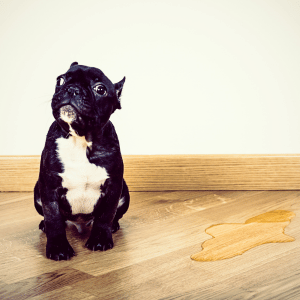
If you’ve ever raised a puppy, you already know that bladder control is a slow work in progress.
Young puppies generally need much more frequent bathroom opportunities than adult dogs. They may need to go after waking up, eating, drinking, playing, or getting excited, in addition to their regular potty schedule.
As puppies mature, they’re typically able to wait longer between bathroom breaks. However, expecting too much too soon can lead to accidents, unnecessary stress, and delayed potty training.
Consistency is especially valuable during this stage. A predictable potty and walking routine helps puppies learn what to expect throughout their day.
For puppies, the rule of thumb is that they can hold their bladders for about 1 hour per month of age, up to 6 hours. If your puppy is going all day, that’s way too long.
 How Often Should Senior Dogs Go Potty?
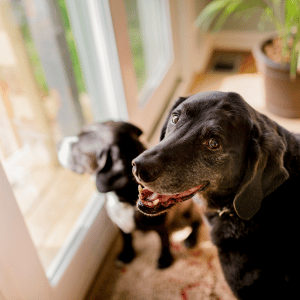
Your dog’s bathroom routine can change again as they get older.
Senior dogs may need more frequent potty opportunities due to age-related changes or medical conditions. Some medications can also increase thirst or urination.
If your dog’s normal bathroom habits suddenly change, don’t simply assume it’s because they’re getting older. Increased urination, accidents in the house, difficulty urinating, or other noticeable changes are worth discussing with your veterinarian because they can be signs of illness.
Once given a clean bill of health, keep in mind that aging is uncomfortable for dogs. Their bodies ache, their senses dull. The last thing they need is to be uncomfortable while waiting on you to return for a potty break.
 The Poop of It All
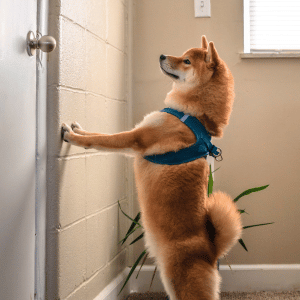
It’s important to note that most guidelines about how long a dog can “hold it” refer primarily to urination, which is a little easier to anticipate and schedule.
Bowel movements can be much less predictable…
Diet, meal timing, activity, age, stress, and an individual dog’s digestive system can all affect when they need to poop. When a dog isn’t given an opportunity to eliminate throughout an entire workday, the result can be more than uncomfortable.
They may become restless or distressed trying to hold it, or eventually have an accident in the house. And unlike a quick pee accident, a bowel movement can get messy fast, especially if a dog steps in it, tracks it through the home, or becomes upset by the accident, especially if they are potty trained and know going inside is against the house rules.
 Why a Midday Dog Walk Can Make a Big Difference
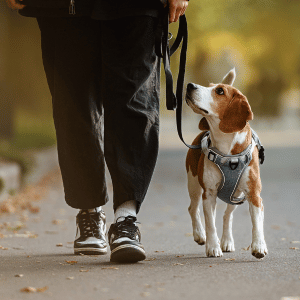
A midday dog walk provides an important opportunity for both urination and defecation, helping your dog stay comfortable while you’re away and making those extra-long stretches between bathroom breaks less likely.
But the benefits of a midday dog walk don’t stop at the bathroom break.
A professional dog walk also allows your dog to move their body, sniff, explore, enjoy mental enrichment, and spend time with someone they know and trust. Instead of spending the entire day waiting for you to return, your dog gets something to look forward to right in the middle of it, keeping them engaged, happy, healthy, and comfortable,
 What If I Have a Fenced Yard?
A fenced yard is convenient, but opening the back door isn’t necessarily the same as going for a walk.
Your dog may quickly do their business and head back inside. A walk offers an opportunity to explore new scents, experience a changing environment, get some exercise, and engage their brain.
For busy Connecticut Shoreline pet parents, professional dog walking can meet several needs at once: potty break, exercise, enrichment, companionship, and routine.
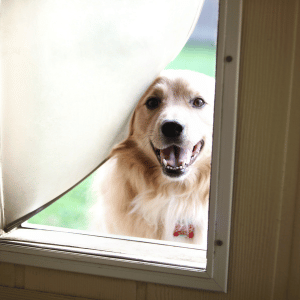
Plus, as we’ve shared in the past, doggie doors can invite unwanted critters inside and can lead to pet safety concerns like dog theft. We always prefer a professional dog walk midday to prevent issues. Entrusting your dog to one of our vetted, trained, dedicated dog walkers just makes the most sense.
Tracking Pee & Poop
There’s another advantage to having a consistent dog walker: we can track their elimination and learn what’s normal for your dog, among other things.
Through recurring walks, the Shoreline Happy Paws team becomes familiar with your dog’s usual bathroom habits, behavior, energy, and walking routine.
If something suddenly seems different, such as needing to urinate much more frequently, straining to go, diarrhea, constipation, or an unusual change in bathroom habits, we can document what we observe and let you know.
We’re not diagnosing medical problems, but having another trained set of eyes on your dog can be valuable. And, if something goes wrong, we have a history of your dogs’ “movements” that can help solve potty mysteries or serve as a diary for your vet down the line.
How Often Does My Dog Need to Go Potty?
While there is no exact formula to answer the question of, “How often does my dog need to go potty?”, work meetings run late, commutes take longer than expected, appointments pop up, and life happens.
Yet, your dog’s bathroom needs don’t change just because your calendar does!
Recurring professional dog walks give your dog a dependable opportunity to relieve themselves while also providing exercise, enrichment, and a welcome break in their day.
Your dog may be able to wait until you get home, but with a trusted dog walker in their routine, they don’t have to!
Professional Dog Walking in the CT Shoreline
We are currently accepting new clients for our dog walking and dog hiking adventure services. For a limited time, you can earn free dog walks when you sign up for recurring weekly walks!
New Shoreline Happy Paws clients can create an account. We will be in touch to further discuss your needs and set you and your family up with the care you need. Existing clients, please book services by logging in to your client profile.
We serve the following areas of the Connecticut Shoreline:
- Old Saybrook
- Essex, Ivoryton & Centerbrook
- Deep River
- Chester
- Westbrook
- Clinton
- Old Lyme
- East Lyme
- Niantic
Certain Parts and Certain Service Hours in:
- Lyme and Madison
- Waterford, New London, Groton
- Uncasville, Gales Ferry, Mystic, Noank