
You come home from work, unlock the door, and there’s your dog, tail wagging and thrilled to see you. Everything looks fine. But how do you know what happened during the eight or nine hours before you walked through the door? Some dogs genuinely handle time alone well. Others may experience boredom, stress, anxiety, or simply struggle with going an entire workday without a bathroom break or activity. Since your dog can’t exactly send you a midday status report, you have to look for clues. Here are 5 ways to tell if your dog did well home alone while you were at work.
The best way to assess your dog’s state of mind while home alone is to use a security or pet camera. Today, cameras are very affordable and can be placed in the room or rooms where your dog stays while you’re away.
 1. Were There Any Accidents?
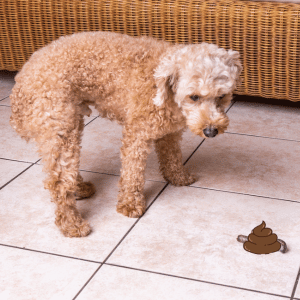
Finding urine or stool in the house with a potty-trained dog is an obvious sign that something didn’t go according to plan.
An accident doesn’t necessarily mean your dog has forgotten their housetraining. They may simply have been asked to wait longer than they comfortably could or are experiencing urination or defecation as a result of separation anxiety. Age, health, diet, hydration, medications, and changes in routine can all affect bathroom needs, but so can stress and fear.
Here’s a blog we recently shared about how long your dog can “hold it”, which should help you determine if they are simply waiting too long between walks or if there is something else going on.
Pay attention to patterns. If a normally house-trained dog begins having accidents while you’re away, especially if the change is sudden, talk with your veterinarian to rule out a medical issue. If long workdays or separation anxiety are the problem, a midday dog walk can provide a much-needed bathroom opportunity before you get home and can significantly break up the day and reduce anxiety in your sensitive pup.
 2. Did Your Dog Cause Any Damage to the Home?
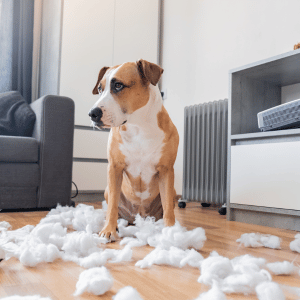
A chewed pillow. Scratched door. Destroyed shoe. Trash container mysteriously emptied across the kitchen.
Dogs don’t destroy things to “get back at us” for leaving. Destructive behavior can have several causes, including boredom, insufficient enrichment, or distress associated with being alone.
Look at what your dog is damaging, too. Chewing random household objects may look different from repeatedly scratching or chewing around doors and windows after you leave. Rather than labeling your dog as naughty, think about what the behavior might be communicating and consider crate training your dog to protect them from choking and intestinal obstruction from destructive chewing.
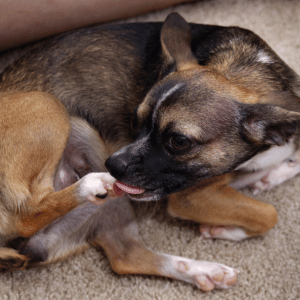 3. Did Your Dog Lick Themselves Excessively?
Licking can be a normal part of grooming, but repetitive or excessive licking can sometimes be a self-soothing behavior meant to relieve stress and anxiety.
If your dog repeatedly licks their paws, legs, or another area while home alone, particularly to the point of redness, irritation, or hair loss, it deserves attention.
Stress and anxiety aren’t the only possible explanations for licking. Allergies, pain, skin problems, and other medical issues can also cause excessive licking, so persistent licking should be discussed with your veterinarian.
The important thing is recognizing that a quiet dog isn’t necessarily a relaxed dog, and that licking sound your dog keeps making might be telling you something.
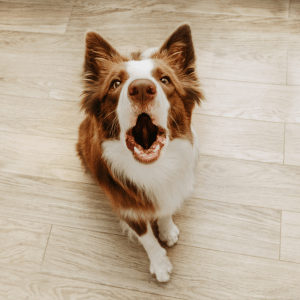 4. Was There Barking or Pacing?
Unless your neighbors leave a note, you might never know your dog spent part of the afternoon barking. This is where a camera can be incredibly useful.
Check in periodically or review recordings to see what your dog actually does after you leave. Do they settle down and sleep? Or do they repeatedly pace, bark, whine, stare out the window, or move between the door and windows?
Of course, while observing your dog via your camera, you’re not looking for a dog who remains perfectly still all day. You’re looking for their ability to settle and relax.
If your dog spends significant portions of the day unable to settle, it’s worth investigating why and discussing persistent concerns with your veterinarian or a qualified behavior professional. Adding a midday dog walk for a dog that barks and paces is also highly beneficial.
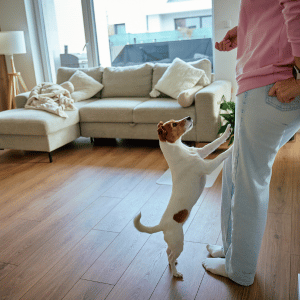 5. How Does Your Dog React When You Leave and Return?
Pay attention to both ends of the workday.
When you’re preparing to leave, does your dog remain relatively relaxed? Or do they begin panting, pacing, whining, following you closely, or becoming distressed when you pick up your keys?
Then consider what happens when you return.
Being excited to see you is normal. You’re their person! But an extremely frantic greeting combined with other signs of distress during your absence may tell you something more. A dog following you around everywhere you go once you’re finally home may be fearing you’ll leave again, a common sign of separation anxiety.
5 Ways to Tell If Your Dog Did Well Home Alone While You Were at Work
If you observe your dog while you’re at work and notice that they are struggling with long days at home, you don’t necessarily need to rearrange your entire life.
A recurring professional dog walk can break up the day with a bathroom opportunity, exercise, sniffing, enrichment, companionship, and something predictable to look forward to.
At Shoreline Happy Paws, recurring walks also allow our team to build a relationship with your dog and learn their normal behavior, preferences, and routines.
You get to focus on your workday. Your dog gets a trusted friend showing up in the middle of their day, because doing well home alone is easier with a little love and support. Plus, a potty break never hurts!
The Best Dog Walkers in the CT Shoreline
We are currently accepting new clients for our dog walking and dog hiking adventure services. For a limited time, you can earn free dog walks when you sign up for recurring weekly walks!
New Shoreline Happy Paws clients can create an account. We will be in touch to further discuss your needs and set you and your family up with the care you need. Existing clients, please book services by logging in to your client profile.
We serve the following areas of the Connecticut Shoreline:
- Old Saybrook
- Essex, Ivoryton & Centerbrook
- Deep River
- Chester
- Westbrook
- Clinton
- Old Lyme
- East Lyme
- Niantic
Certain Parts and Certain Service Hours in:
- Lyme and Madison
- Waterford, New London, Groton
- Uncasville, Gales Ferry, Mystic, Noank